

Reversing 20 Years of Diabetes Progression: A 60-Year-Old Patient’s Journey at Our Clinic

Discover how our advanced human umbilical cord mesenchymal stem cell (hUC-MSC) protocol helped a long-term Type 2 Diabetes patient achieve pharmaceutical independence and restore pancreatic function within 12 weeks.
The Challenge of Long-Term T2DM & Our Strategy
Traditional treatments for Type 2 Diabetes mellitus (T2DM)—such as oral drugs and insulin injections—manage symptoms but fail to reverse underlying insulin resistance or the progressive dysfunction of pancreatic β-cells. Our medical team leverages human umbilical cord mesenchymal stem cells (hUC-MSCs) as a potent regenerative strategy.
Direct Islet Repair
MSCs home to the damaged pancreas, promoting regeneration of healthy tissue.
Anti-Inflammatory Microenvironment
Reduces chronic low-grade inflammation that drives diabetic complications.
Improving Insulin Sensitivity
Enhances target tissue response, directly reducing insulin resistance.
Regenerating Insulin Cells
Promotes endogenous stems cells to differentiate into functional insulin-producing cells.
β-Cell Revitalization
Helps reverse β-cell dedifferentiation and improves inherent function.
Patient Profile & Our Personalized Protocol
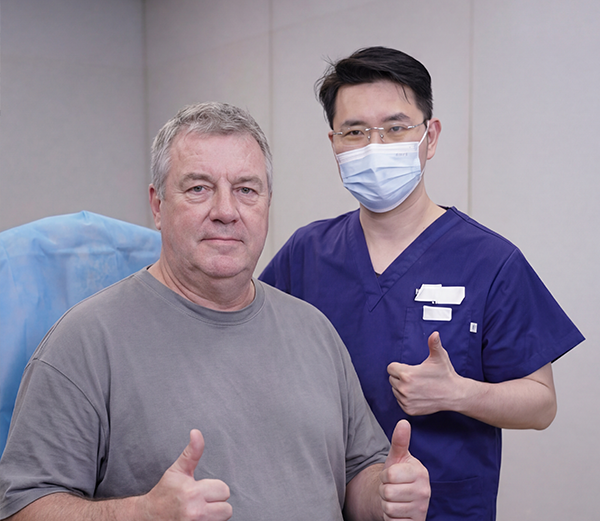
Patient Baseline
Age/Gender: 60-year-old male
History: 20 years of T2DM
Complications: Hypertension, Fatty Liver, Diabetic Retinopathy (Stage
1)
Pre-treatment Status: HbA1c 8.5% (Poor control despite combined insulin
& oral drugs).
Our Medical Team’s Treatment Strategy
Following a specialized screening and assessment period, our medical team administered a standardized hUC-MSC protocol:
- Session Count: 3 consecutive sessions
- Interval: 1 week between infusions
- Administration: Intravenous (IV) infusion
- Monitoring: 24-hour observation after each infusion with standard follow-up through 12 weeks.
Clinical Outcome: Remarkable Efficacy Within 12 Weeks
Our patient demonstrated comprehensive metabolic improvement. This recovery was a gradual process, highlighting the sustainable regenerative effect of stem cells rather than a temporary pharmaceutical fix.
1. Blood Glucose Optimization
- HbA1c Reduction: Dropped from a dangerous 8.5% to <7.0% by Week 4.
- Optimal Results: HbA1c hit a lowest value of 5.3% by Week 12.
- Fasting/Postprandial Glucose: Both Fasting and 2-hour Postprandial glucose levels consistently fell below baseline throughout follow-up.
2. Pharmaceutical Independence
- Stopped Oral Medications: Completely ceased all oral anti-diabetic drugs by Week 4.
- Insulin Reduction: Achieved over a 50% reduction in insulin dosage by Week 4.
- Final Status: By Week 12, the complex initial regimen was replaced with minimal insulin (20u/day Degludec Aspart), down frommen with multiple daily shots.
3. Restoration of Pancreatic Function
markers showed significant recovery by Week 12:
- Pancreatic β-Cell Function (HOMA-β): Began rising after Week 4, reaching peak levels by Week 12.
- Insulin Resistance (HOMA-IR): Consistently dropped after hUC-MSC infusion, hitting its lowest point by Week 12.
- Postprandial C-peptide (PCP): Started a sustained increase 4 weeks after infusion through Week 12.
Validated Safety and International Trust
Safety is the cornerstone of our practice.
In this case study, as in many of our clinical applications,靜脈输注 hUC-MSCs demonstrated excellent tolerability. Throughout the 12-week follow-up, the patient experienced:
- NO infusion-related reactions.
- NO liver or kidney function abnormalities.
- NO infection or malignant events.
This study confirms that our standardized靜脈输注 hUC-MSC protocol is both safe and reliable, even for patients with long-term metabolic complications.
Expert Perspective: A New Era for Diabetes Management
As highlighted by the Endocrinology Branch of the Chinese Medical Association, stem cell therapy is not merely about symptom control. By targeting pancreatic damage, immune regulation, and insulin resistance concurrently, it offers traditional-drug-resistant patients a potential avenue to **reverse the natural progression of diabetes**.
*Individual results may vary. Treatment efficacy depends on comprehensive clinical evaluation. While this single-case report shows promising results, larger sample sizes are required for further validation.